March 27, 2026

.svg)

Poke vs Sushi: What's the Difference and Which One Is Healthier?

Imagine this: you love sushi, and one fine day someone mentions poke, and the question comes up: aren't both poke and sushi inherently similar?
Both emphasize fresh fish, rice, and Japanese-ish flavors. But poke vs. sushi becomes very distinct the moment you take a closer look at their origins, format, nutrition, and gluten.
This blog breaks down the poke vs. sushi debate and explains why chef-driven, gluten-free poke bowls make a strong case for your everyday meal as well as for health, ultimately answering whether poke is healthy or not.
What's the Difference Between Poke and Sushi?
Let’s begin with their origins.
Poke is Native Hawaiian. Fishermen season fresh-caught fish with sea salt, seaweed, and nuts. No ceremony, just incredibly nourishing food.
Sushi, on the other hand, is centuries of Japanese culinary tradition. Made of vinegar rice, knife craft, nigiri, and omakase.
Sweetfin takes the traditional Hawaiian poke roots and puts them through a California lens. Where this nutritious food becomes a dish curated by chefs, which is also ingredient-centric and sustainably sourced.
Format: Bowl vs. Roll
Sushi is the chef's call. Structure, sequence, temperature, it's all deliberate and controlled.
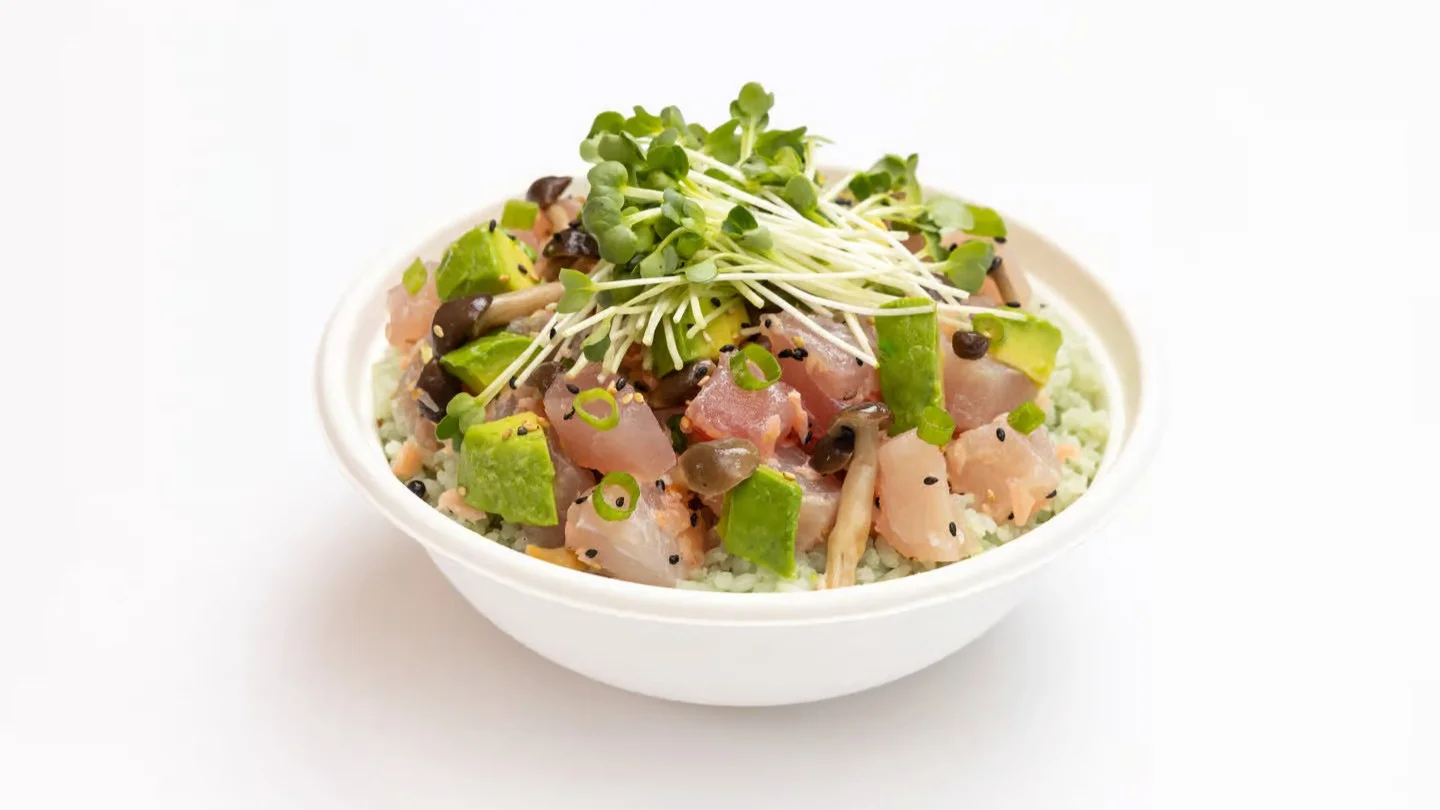
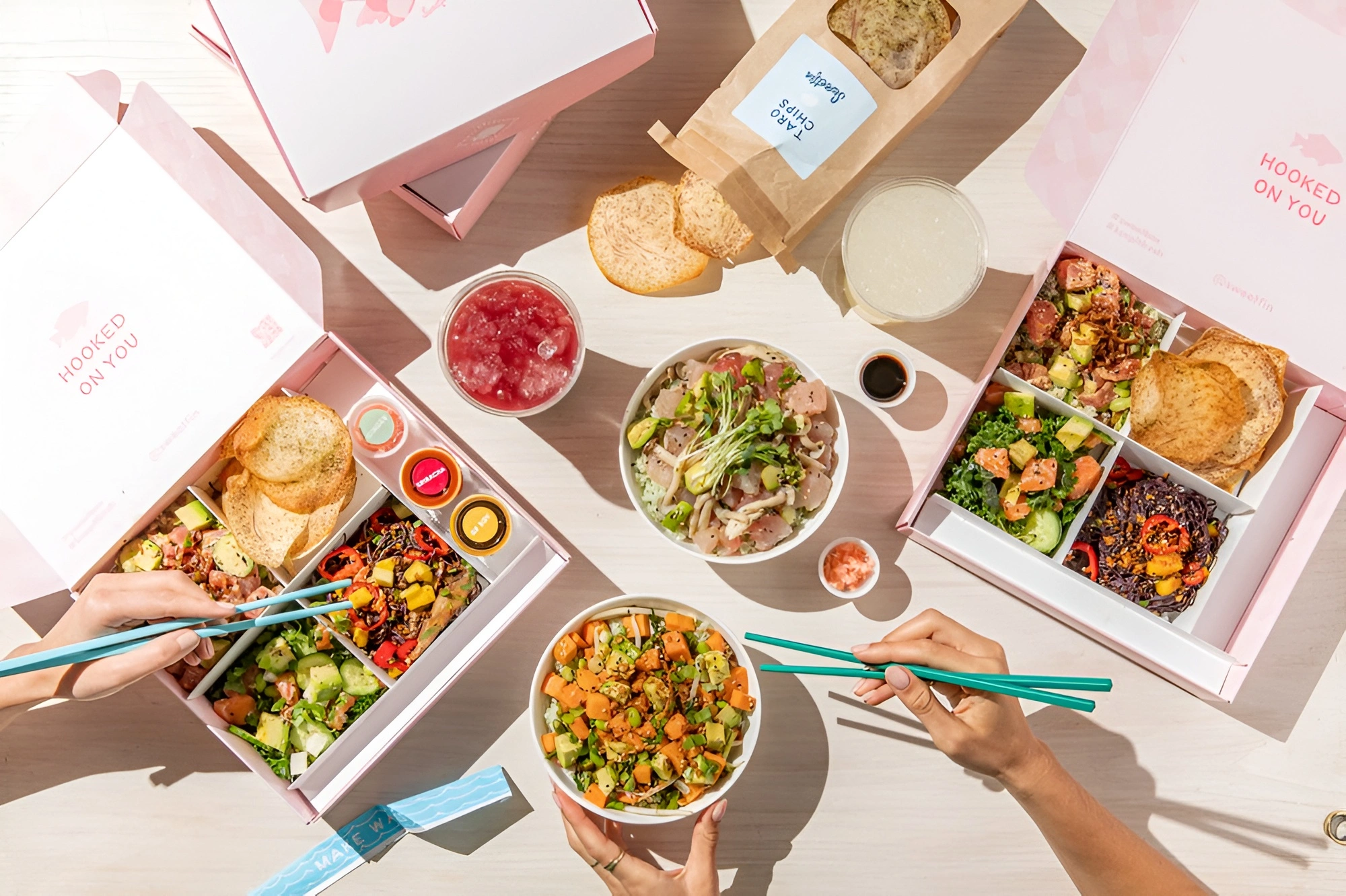
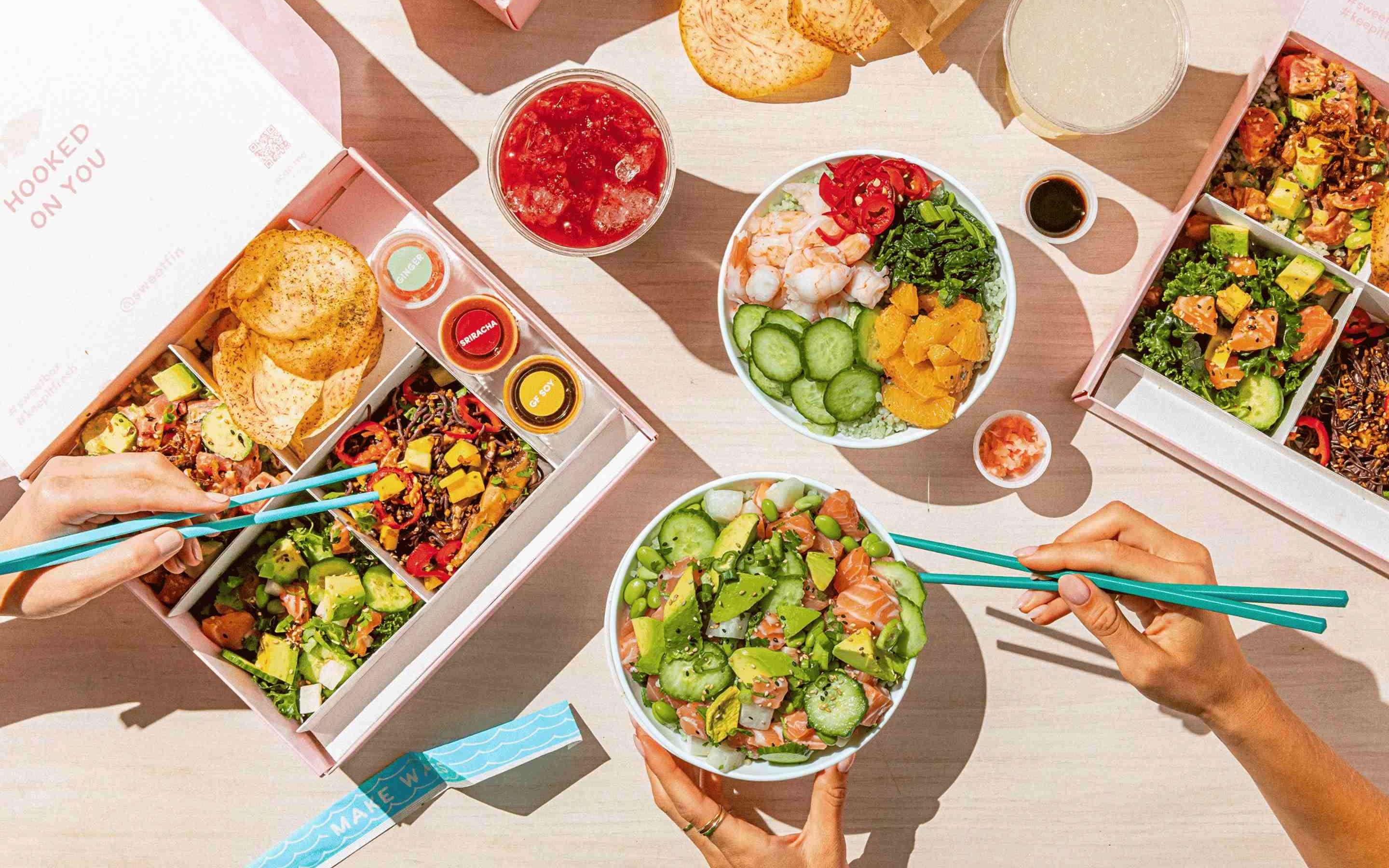
The healthy bowls of poke put you in charge. At Sweetfin, customers can pick the bowl they want. Options range from bamboo rice to forbidden rice and sushi rice, and protein, sauce, and toppings. The full menu shows just how much range that opens up.

The Fish: Similar Starting Point, Different Treatment
Both use sushi-grade fish. Sushi keeps it thin and minimal. Poke, on the other hand, cubes and marinates the fish. Thus, making the sauce a part of its protein. For instance, consider Yellowfin tuna with spicy mayo, salmon with yuzu kosho, and albacore seared with sesame. Every fish is provided with a personality.
The Gluten Factor: A Critical Difference
Traditional sushi never lacks soy sauce. Imitation crab, hidden sauces, batter, and so on, eating gluten-free in a sushi restaurant is hard. On the other hand, the entirety of Sweetfin’s menu is gluten-free. Every sauce, every topping, and every base. Nothing to audit.
These are the fundamental differences between sushi and poke.
How Do the Flavors Compare?
Now let’s take a look at their flavor profiles in detail below.
Sushi Flavor Profile
The flavors in sushi are precise, accurate, and deliberate. The fish is the centre of attention, and the soy sauce and other background flavours remain in the background.
Poke Flavor Profile
This is far bolder. The toppings, sauces, onion, and the base give contrast. And considering the wasabi furikake-dusted taro chips on the side, it is hard for a sushi to achieve the flavor profiles offered by a poke bar.
All the sauces at Sweetfin are homemade, from ponzu lime to spicy mayo. Come and try one for yourself.
Poke vs. Sushi: Which Is Healthier?
Both can be healthy. But is poke healthy in a way that gives you more control? Yes, especially at Sweetfin.
Protein Quality: Equal Footing
Lean fish, omega-3s, high quality- equal on both sides. Sweetfin extends the options further: poached shrimp, seared albacore, grilled chicken, tofu, and sweet potato.
The Base: Where Poke Has the Edge
In sushi, rice is almost always the only option. However, at Sweetfin, you can have a plethora of choices. For instance, cauliflower rice, citrus kale salad, kelp noodle slaw, and forbidden rice. Here, there is real and vast flexibility over carb load and nutrient density.
Toppings and Add-Ons
Specialty rolls hide their extras inside: tempura, cream cheese, blended sauces. Hard to track.
Sweetfin puts everything on top, individually chosen. Edamame, kale, asparagus, cucumber, seaweed salad. You're building the nutritional profile yourself.
Sodium Watch
Soy-based sauces mean sodium adds up in both. Lighter sauces at Sweetfin include ponzu lime, yuzu kosho, or sauce on the side. At the Superfood Bar, cauliflower rice, citrus kale, yuzu kosho, or ponzu lime, pumpkin seeds, asparagus, and seaweed salad are the most nutritionally enriching options on the menu.
A poke bowl is a solid starting point for healthy bowls without doing the math.
Gluten-Free Eating
If you want gluten-free food, the poke bowl is the way to go. And the happy news, Sweetfin is a dedicated gluten-free kitchen.
Now, is poke healthier than sushi? To be fair, both are solid with fresh ingredients. Poke gives more control- base choices, portioned sauces, and topping variety. Sweetfin's menu is also 100% gluten-free, unlike traditional sushi.

What Is Your Pick?
Lastly, there is no "poke vs. sushi." Poke and sushi aren't rivals. Different foods, different occasions.
But for a fast, customizable, 100% gluten-free meal made from scratch, Sweetfin's bowls are hard to beat. Try one, and you'll see why poke has earned a permanent place at the table. Order now!
Frequently Asked Questions
Is poke the same as sushi?
No. Poke is a Hawaiian marinated, cubed fish dish, whereas sushi is a Japanese dish made of vinegar rice, rolls, and nigiri. The same ingredients, but totally different food.
Is poke raw fish?
Traditional poke is raw. In Sweetfin, however, one can choose seared albacore, poached shrimp, or grilled chicken. There are even plant-based tofu available here.
Can I eat poke if I'm gluten-free?
Sweetfin has a 100% gluten-free menu. Though sushi restaurants do not usually accommodate gluten-free customers, poke is very different in this regard.
What's in a healthy poke bowl?
Is poke healthy? Yes! Protein, which is directly sourced in a sustainable way, a nutritious base, fresh toppings. At Sweetfin, all the combinations are gluten-free and prepared daily.
Is sushi or poke better for protein?
Both deliver. Sweetfin lets you combine two proteins, layer in plant-based options like tofu and edamame, and build more total protein into one bowl than a sushi meal typically allows.

.svg)
.svg)
.svg)
Share this article
Written by

.svg)