June 19, 2026

.svg)

What Makes Plant-Based Grain Bowls a Nutritional Powerhouse?


Plant-based eating has shaken off its old reputation. For years, the assumption was that a vegan or vegetarian meal meant a side of compromise: less protein, less flavor, less staying power. But the grain bowl is one of the clearest signs that the assumption was wrong. Build it well, and a plant-based bowl can hold its own against any protein-forward plate in the room.
The reason comes down to layering. A good grain bowl stacks a whole-grain base, a plant protein, several vegetables, healthy fats, and a sauce to tie it all together. Each layer brings something different, and together they cover an impressive amount of nutritional ground in a single container. The result is a meal that is filling, balanced, and built entirely from real food.
In this blog, we will look at why plant-based grain bowls earn their reputation as a nutritional powerhouse, layer by layer, and highlight a few Sweetfin bowls that show exactly how it comes together.
The Whole-Grain Foundation
Everything starts with the base, and whole grains pull more weight than most people realize. Unlike refined grains, which are stripped of their bran and germ, a whole grain keeps the entire seed intact. That means you get the fiber along with the vitamins, minerals, healthy fats, and antioxidants stored in the grain. Harvard Health connects diets rich in whole grains to lower risk of heart disease and type 2 diabetes, and to a longer life compared with diets built on refined grains.
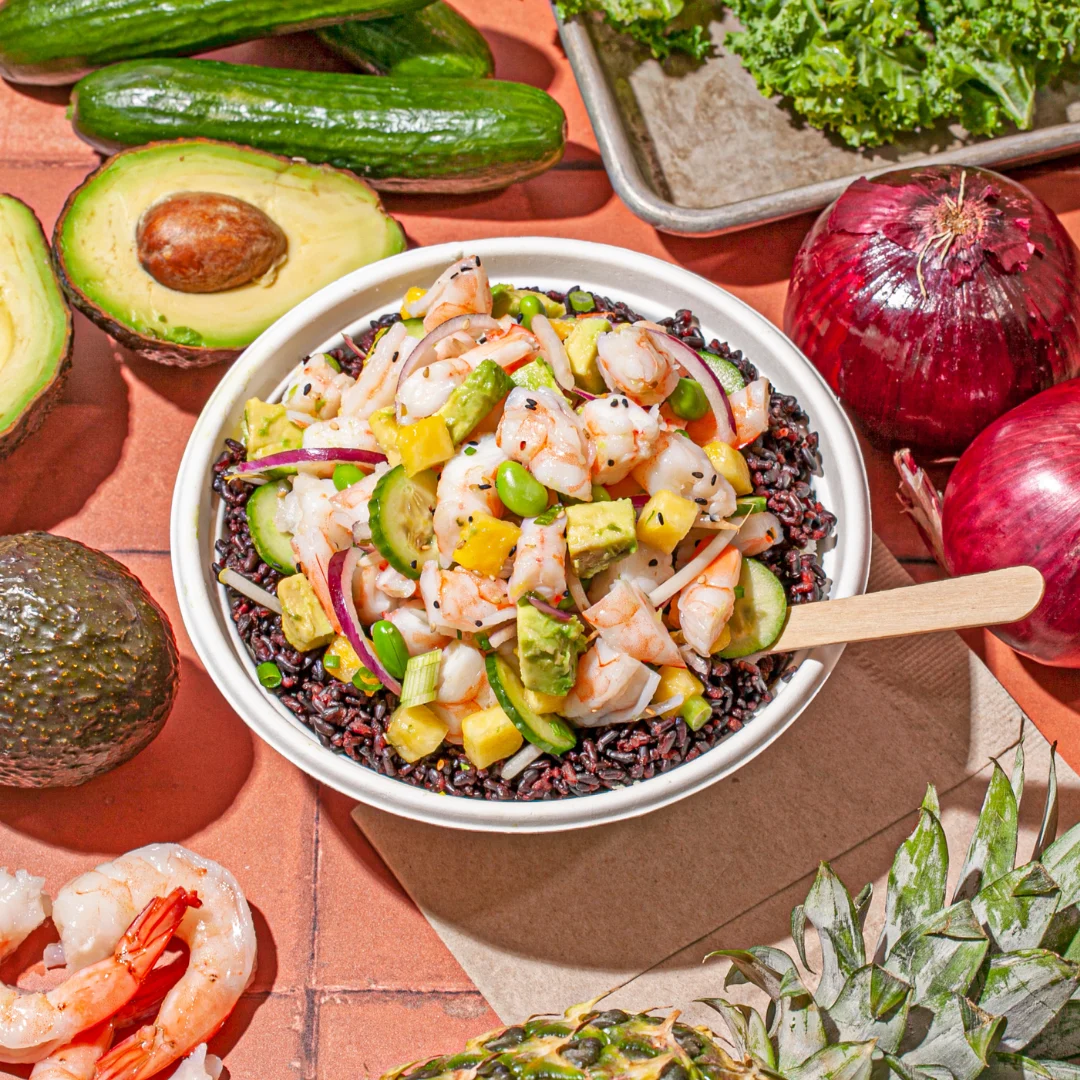
Forbidden rice, also called black rice, is a standout example. The dark hull of black rice contains one of the highest concentrations of anthocyanin antioxidants of any food, the same family of pigments that gives blueberries their color. It also delivers more protein than white rice, plus fiber that helps you stay full. A base like this turns the bottom of the bowl into one of its most valuable layers.
Plant Protein That Actually Fills You Up
The biggest myth about plant-based eating is that the protein falls short. Soy quietly settles the argument. Edamame and tofu are among the few plant foods considered complete proteins, meaning they contain all nine essential amino acids your body cannot make on its own.
Edamame provides about 9 grams of protein per half cup, along with fiber, folate, and iron, while tofu acts like a sponge for whatever sauce surrounds it. Pair either one with a whole-grain base and a few vegetables, and you have a meal that keeps hunger in check for hours. This is the part that makes plant-based bowls realistic for everyday eating rather than an occasional experiment.
The Vegetables Doing the Heavy Lifting
Vegetables are where a grain bowl earns its color and a good share of its nutrients. Sweet potato is a perfect case study. It is one of the richest sources of beta-carotene, which your body converts into vitamin A, and it delivers complex carbohydrates and fiber that provide steady energy rather than a spike-and-crash.
The supporting cast matters just as much. Avocado adds heart-friendly monounsaturated fat and a creamy texture. Mushrooms like shiitake and shimeji bring deep, savory umami and a meaty bite without any meat. Leafy greens such as kale add fiber and micronutrients, while carrots, cucumbers, and cabbage add crunch and freshness. None of these are filler. Each one is pulling its weight, and the variety is exactly what makes the bowl nutritionally complete.
Three Sweetfin Bowls That Prove the Point
Sweetfin's plant-based lineup shows how these layers work in practice, and every option is 100% gluten-free.
- The Miso Eggplant and Mushroom Poke Bowl leans earthy and savory, with a miso-sesame shoyu sauce over Japanese eggplant, shiitake mushrooms, sun-dried tomatoes, and market radish. It is proof that umami does not require fish.
- The Sweet Potato Ponzu Lime Poke Bowl gets brighter and fresher, pairing ponzu-lime sauce with avocado, carrots, edamame, cucumbers, and napa cabbage. The sweet potato and edamame anchor it with steady carbs and complete plant protein.
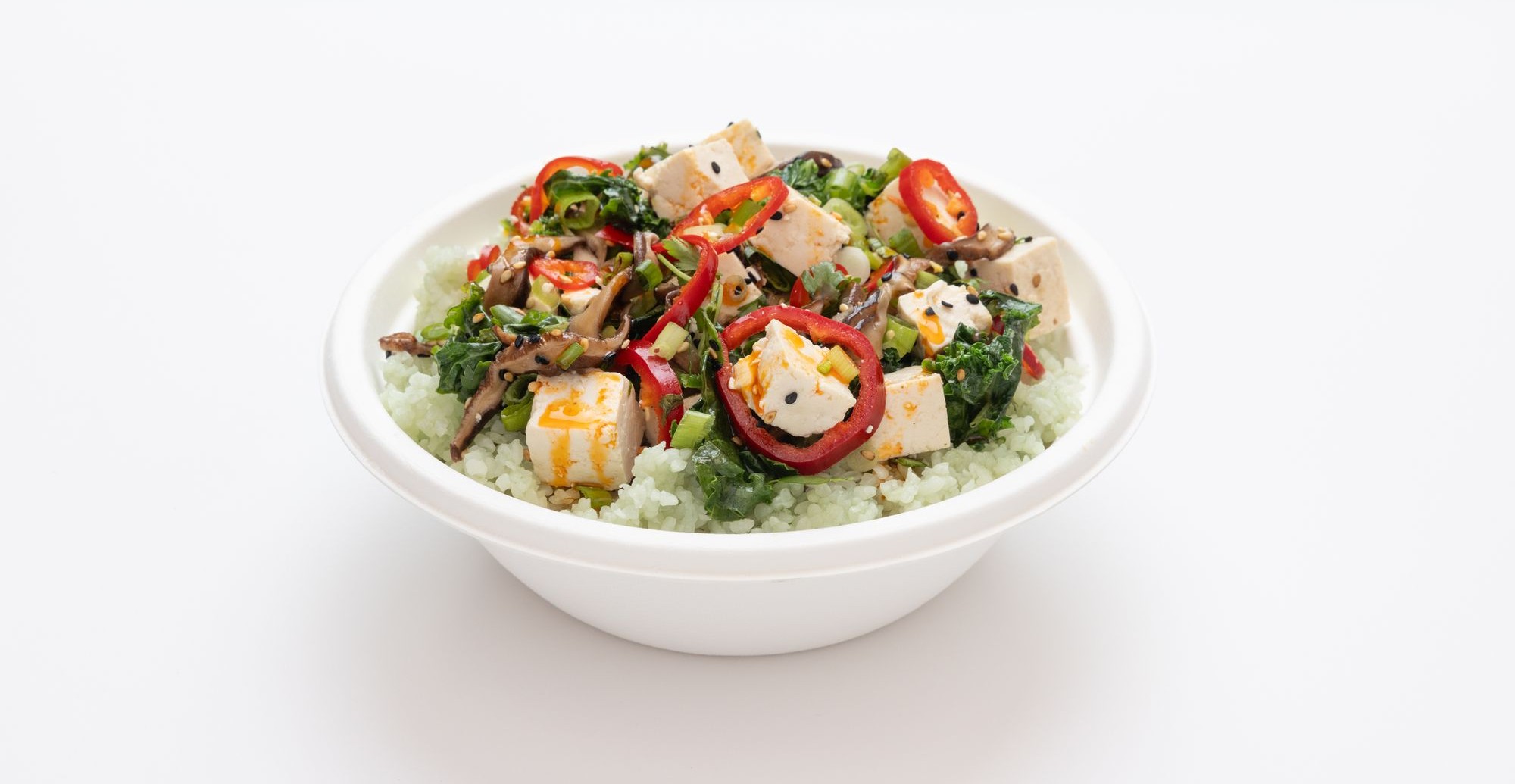
- The Shiitake Chile Tofu Poke Bowl brings the heat, combining tofu with classic sauce, chile oil, cilantro, sautéed kale, and pickled Fresno. Tofu carries the protein while the chile and herbs keep every bite lively.
If you want the most protein-dense option of all, the High Protein Plant-Based Bowl loads sweet potato, edamame, asparagus, bean sprouts, avocado, sautéed kale, carrots, and crispy garlic over forbidden rice with miso sesame shoyu. It is the whole layered philosophy in a single bowl.

Frequently Asked Questions
Do plant-based grain bowls have enough protein?
They can, especially with soy. Edamame and tofu are complete proteins with all nine essential amino acids, so a bowl built around them is genuinely filling.
Are grain bowls good for weight management?
Often, yes. The fiber from whole grains and vegetables plus the protein from sources like edamame help you feel full, which makes it easier to avoid overeating later.
What makes black rice healthier than white rice?
Black rice is a whole grain, so it keeps its fiber, antioxidants, and nutrients. It is also higher in protein and rich in anthocyanins, which white rice does not provide.
Build Your Plant-Powered Bowl
A great plant-based grain bowl is not a sacrifice. It is a complete, satisfying meal where every layer is doing something for you. Order online from Sweetfin and taste how good plant-based can be.

.svg)
.svg)
.svg)
Share this article
Written by

.svg)