March 20, 2026

.svg)

Forbidden Rice: Ancient Grains Making a Modern Comeback in Poke Bowls

Most people choose white rice on autopilot; it's familiar, safe, and forgettable. But there's a grain on the menu that has been turning heads for centuries, and it's finally getting the modern spotlight it deserves. Forbidden rice, once so prized that it was reserved exclusively for Chinese emperors, is now making its way into some of the most thoughtfully built bowls in California.
Deep purple in color, nutty in flavor, and surprisingly nutrient-dense, it's the kind of base that makes everything built on top of it taste more intentional. At Sweetfin, forbidden rice is a deliberate choice, woven into chef-driven bowls where every ingredient earns its place.
In this blog, we'll explore what forbidden rice actually is, why its color comes from the same compounds found in blueberries, how it compares to brown rice, and where you can taste it in a bowl built around it.
What Is Forbidden Rice?
The story begins in ancient China, where this grain was grown in small quantities, harvested with care, and delivered exclusively to the imperial court. It was reserved for the emperor; common people were simply not allowed to eat it. That restriction is exactly where the name comes from: forbidden rice.
Beyond its royal status, the grain was valued for its nutritional properties, something modern nutrition science has since confirmed. Today, it's recognized as one of the most antioxidant-rich whole grains available, and nutritionists continue to highlight its benefits as interest in black rice grows.
What Makes It Purple? The Science Behind the Color
Here's the thing: it's not really black, it's purple. Deep purple, making it look almost black.
The deep purple color comes from anthocyanins, the same antioxidant pigment that gives blueberries and blackberries their rich hue. It is entirely natural, concentrated in the grain's outer bran layer, and deepens further when cooked. That pigment is also a key reason why forbidden rice ranks among the most antioxidant-dense whole grains available.
Black Rice/Forbidden Rice Benefits
Those anthocyanins do work. Research has shown that black rice's antioxidant density is favorably comparable to that of blueberries. By serving. For a poke bowl base, that's real value.
Anti-inflammatory properties and cell protection. This is expected from berries, but now it's in your grain.
A Smarter Healthy Carbohydrate
Let's be real about carbs. Forbidden rice is a whole grain. Bran and germ intact. White rice gets milled down until most of the goodness is gone.
Is forbidden rice a healthy carbohydrate? Yes, compared to refined stuff. It has a higher fibre content, which is better for digestion. It also means that it is responsible for providing you with sustained energy for longer.
The only thing to be kept in mind is that it's still a carbohydrate. Just a lot more nutrient-dense than other carbs,
Protein and Mineral Content
It is highly nutritionally dense; it has more protein than white or brown rice. Contains iron, too. Naturally gluten-free.
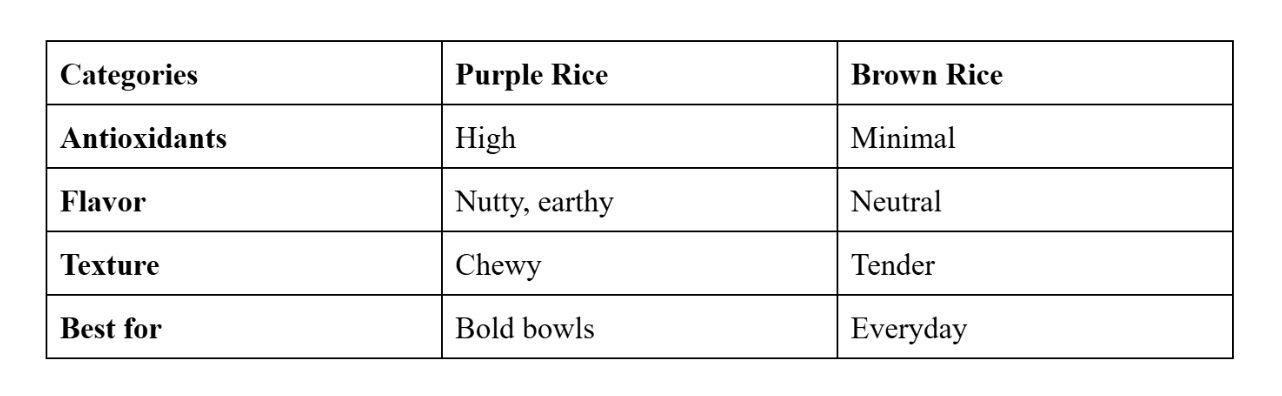
Both whole grains. Both beat white rice. Black rice benefits win on antioxidants. And that’s exactly why the purple rice vs brown rice conversation keeps coming up in nutrition circles.
Flavor differs. Brown rice stays neutral. Black rice brings a nutty, earthy, slightly sweet flavor. You notice it.
Texture? Black rice is chewier. Hold up under sauces. When building a poke bowl, that matters.
Why Forbidden Rice Belongs in a Poke Bowl
Forbidden rice isn't just a base; it's a flavor decision. Its deep, nutty earthiness pairs effortlessly with fresh fish, soaking up soy sauce and citrus ponzu without competing with either. It complements rather than fights, which is exactly what a great poke base should do. When bold sauces enter the picture, that earthiness becomes even more valuable:
- Gochujang, the rice grounds the slow, fermented heat, keeping the bowl balanced
- Spicy mayo, the nuttiness softens the richness, adding depth without heaviness
- Citrus ponzu, the grain absorbs brightness without turning sharp or acidic
And visually, few ingredients do more work. Deep purple against coral salmon, creamy avocado, and bright edamame make for a bowl that photographs beautifully, and in today's food culture, that matters.
Structural Integrity Under Sauce
White rice wilts under the sauce. It absorbs too fast, turns soft, and loses its presence in the bowl. Forbidden rice behaves differently. Its naturally chewy texture holds up under dressings and marinades, absorbing flavor without breaking down. It stays distinct in every bite. It's also more filling and fiber-rich, meaning one well-built bowl genuinely satisfies.
Once you build a bowl on forbidden rice, it's hard to go back, because when a base does this much, every other choice in the bowl gets better.
Forbidden Rice at Sweetfin: A Base Built Into Chef-Driven Bowls
Sweetfin offers forbidden rice across the menu. Every ingredient earns its place.
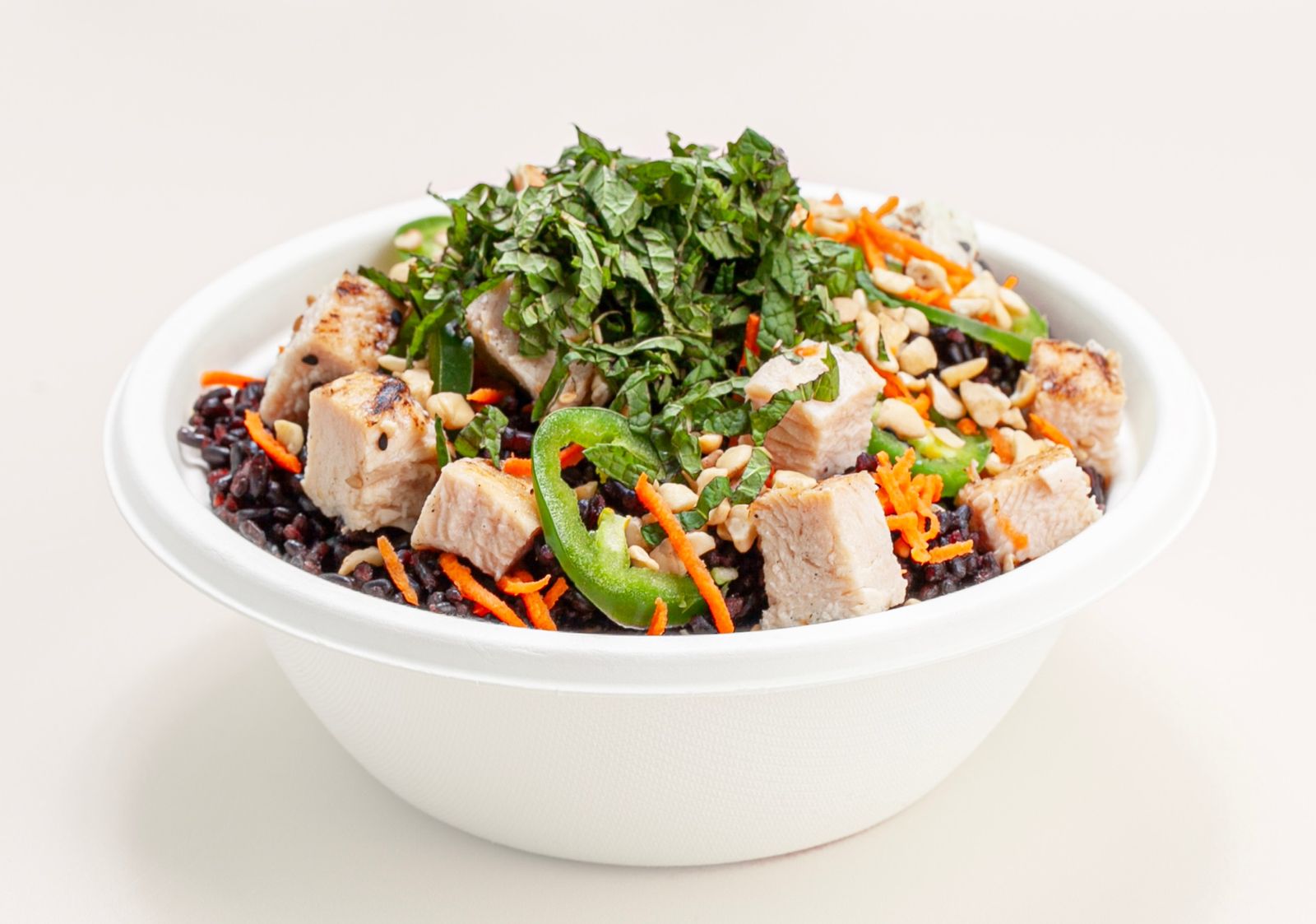
Spicy Chicken Grain Bowl
Grilled chicken over forbidden rice. Spicy garlic lemongrass ponzu. Jalapeños. Carrots. Crunchy cashews. Mint. Chili oil. Sesame seeds.
The nuttiness plays off the lemongrass brightness. Against chili oil heat, it keeps things grounded. Chicken bowls don't usually feature forbidden rice. That's what makes this one different.
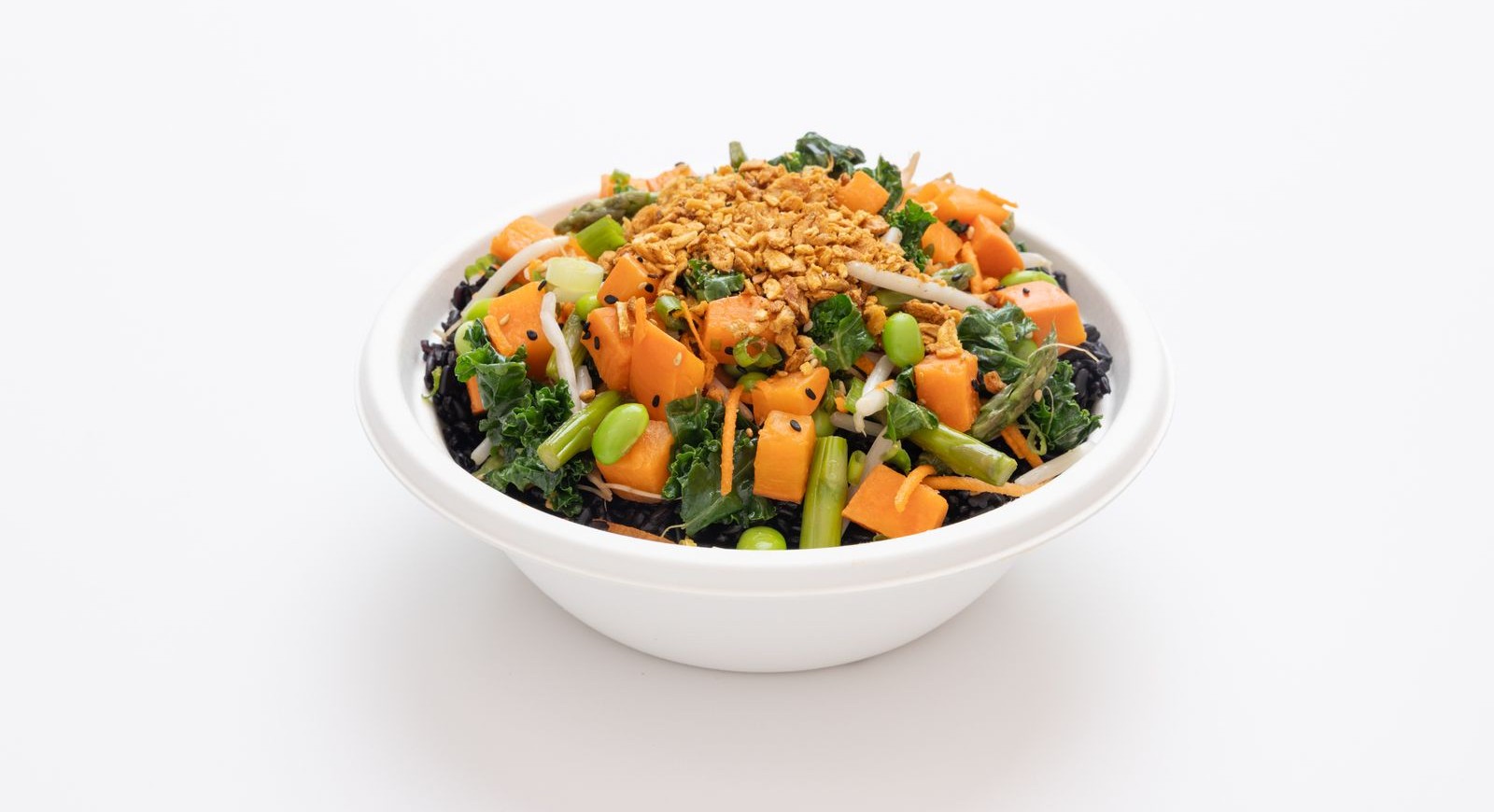
High Protein Plant-Based Bowl
Sweet potato. Edamame. Asparagus. Bean sprouts. Avocado. Sautéed kale. Carrots. Crispy garlic. Miso sesame shoyu sauce. All over forbidden rice.
Rice pulls double duty. Adds protein to a plant-based bowl. Earthy sweetness complements roasted sweet potato. Works with miso depth. For anyone seeking a healthy carbohydrate with plant goals, this is it.
Check out all our grain bowl options to see which base and toppings speak to you.
Ancient Grain, Modern Bowl
Forbidden rice earned its name by being too good to share. Emperors knew it. Nutritionists agree. Now, anyone at Sweetfin can try it.
Nutritional case. Flavor case. Culinary case. All points point in the same direction. This is the most intentional base choice in a poke bowl.
Sweetfin builds bowls around that intention, which is why we can manage taste with health. Explore the Sweetfin menu and choose forbidden rice as your base. Good enough for emperors. Good enough for lunch.
FAQs
Q: What is forbidden rice?
A: Whole grain black rice with deep purple color, nutty flavor, widely recognized for its antioxidants
Q: Why is it called forbidden?
A: Ancient China reserved it for the Emperor. Common people weren’t allowed to eat it.
Q: What are the benefits of black rice?
A: High in anthocyanin antioxidants, fiber, and iron. Naturally gluten-free. Lower glycemic impact than white rice. All of which makes it an excellent choice for health.
Q: Is forbidden rice better than brown rice?
A: While both are whole grains, forbidden rice has more antioxidants, a richer flavor, and a chewier texture, making it healthier and tastier.
Q: Is forbidden rice a good carbohydrate for poke bowls?
A: Yes. Dense texture holds up under sauces, making it a nutrient-rich, healthy carbohydrate choice.
Q: Where can I try it?
A: Sweetfin offers forbidden rice in signature bowls and a catering Poke Bar program.

.svg)
.svg)
.svg)
Share this article
Written by

.svg)